
September 2026
Low-slope roofs on small commercial buildings fail in predictable ways, and almost all of them trace back to three things. Here they are, in the order they cause trouble.
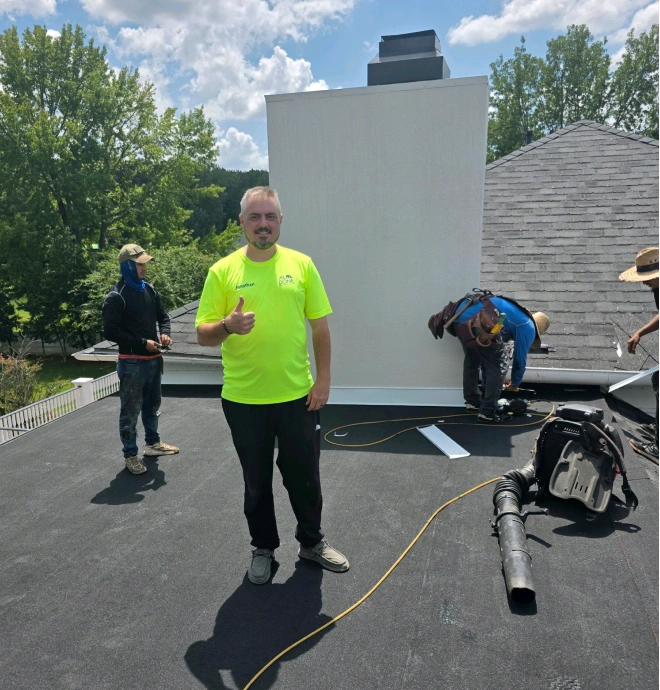
It is low-slope, not flat
A so-called flat roof is built with pitch, because water has to go somewhere. When the pitch is wrong, or insulation has compressed, or a drain sits above the low spot, water stops leaving.
Ponding water still there two days after rain is the warning.
Ponding water that is still there two days after rain is the warning. It adds weight, it finds every seam, and on a hot roof it accelerates membrane breakdown.
Fixing drainage is less glamorous than replacing a membrane and it is more often the actual problem.
Membrane thickness is a real specification, not a detail. Thicker membrane costs more up front and tolerates foot traffic and hail better over its life.
Seams are where membranes die
A single ply roof is a set of sheets joined together. On TPO those joints are heat welded, and a weld run too cool, too fast, or over a dirty surface looks perfect on day one and separates in year three.
Good inspection includes probing seams, not just looking at them. A seam that opens to a probe is a leak that has not started yet.
This is also why membrane thickness and installer skill matter more than brand.
Insulation under the membrane does two jobs: thermal performance and providing the slope that moves water to the drains. Compressed or wet insulation fails at both.
Curbs, drains and everything sticking through
Every rooftop unit, vent, drain and grease duct is a hole somebody had to close. Those closures are where most commercial leaks originate, not in the open field of the roof.
Equipment gets serviced by technicians whose job is the equipment. Tools get dropped, panels get dragged, and foot traffic concentrates around units. On a lot of buildings the HVAC service path is visible as a wear line in the membrane.
Walkway pads where people actually walk are cheap insurance.
Ask about the attachment method, whether mechanically fastened, adhered or ballasted, because it affects wind performance and how the roof behaves over time.
Why TPO ended up everywhere
White TPO reflects a lot of solar energy instead of absorbing it, which matters in a Memphis summer both for cooling load and for how hard the roof itself is working.
Heat welded seams, done properly, are strong. And it is repairable: a puncture is a patch, not a crisis.
It is not the answer for every building. It is a good default for a lot of small commercial around here.
Keep a simple roof log: what was done, when, and by whom. On a commercial building it pays for itself the first time there is a warranty question.
Maintenance that actually extends the life
Keep the drains clear. It is the single highest value maintenance item on a low slope roof and it takes minutes. A blocked drain turns a rainstorm into thousands of pounds of standing water.
Inspect after any work has been done up there. HVAC service, sign installation, satellite work: every one of those puts somebody on your membrane with tools.
Walk it twice a year looking for punctures, open seams, loose flashing at curbs, and debris that holds moisture. Photograph what you find so you can track whether it is changing.
Fix small things while they are small. On a commercial roof the cost of a leak is rarely the repair, it is what the water landed on.
Questions we get asked
How long should a commercial flat roof last?
It depends heavily on membrane thickness, installation quality and traffic. Drainage and seam quality matter more than the number on the brochure.
Can you work around our business hours?
Yes. We section the work, dry in what we open, and schedule around service. A restaurant does not lose a dinner service over this.
Is a coating a real fix?
Sometimes, on a roof that is fundamentally sound. Over a wet or failing system it buries the problem rather than solving it.
How often should it be inspected?
Twice a year and after severe weather is reasonable, especially where rooftop equipment gets serviced regularly.
Do you do repairs or only replacement?
Both. Most of what we do on commercial low-slope is repair.
What to take from this
Water still standing two days after rain is a drainage problem, not a membrane problem.
Seams fail where the weld was rushed, and probing finds it before the ceiling does.
Most commercial leaks start at curbs, drains and penetrations.
Walkway pads where technicians actually walk cost almost nothing.
Get it handled
Jonathan Stephenson answers the phone himself, walks the roof, and gives you a written number. Serving Germantown, TN and the Memphis metro.