
September 2026
A line of storms goes through overnight and by morning half the street is looking at their roofs. Here is what actually matters in the first three days, in the order it matters.
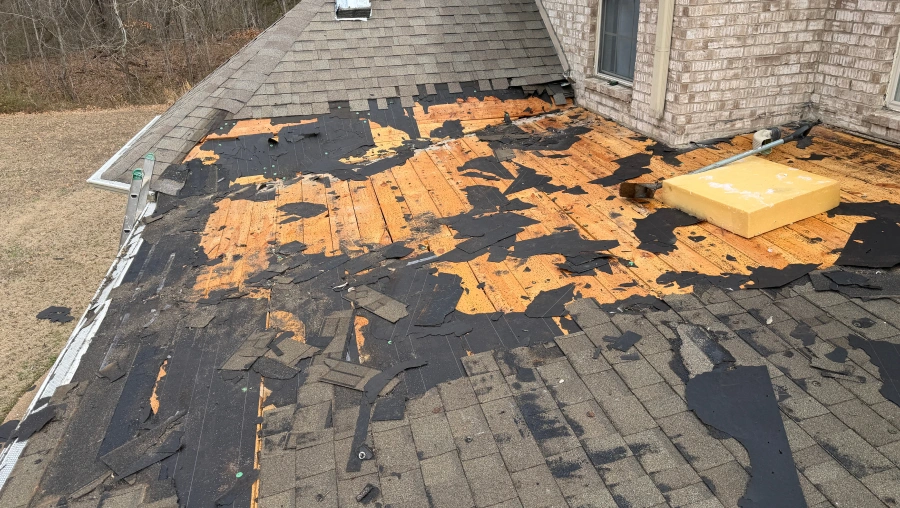
Start from the ground
Do not get on the roof. Wet shingles after a storm are genuinely dangerous, and there is almost nothing you can learn up there that you cannot learn from the ground with a phone camera and ten minutes.
Soft metals are the honest witness. Hail that dented your gutter did something to your roof too.
Walk the perimeter of the house and look for shingle pieces in the yard, granules washed out at the bottom of downspouts, and dents in anything soft: gutters, downspouts, vent caps, the grill lid, the mailbox.
Then go inside and look at ceilings, especially in corners, around light fixtures, and in closets against exterior walls. A stain the size of a coffee cup today is a much smaller job than the same stain in three weeks.
One more ground level check worth doing: look at the ridge line from across the street. A ridge that reads wavy or dipped where it used to be straight is a structural signal rather than a surface one, and it is the kind of thing you only notice from a distance.
Photograph everything before anyone touches it
This is the single highest value thing you can do, and almost nobody does it properly. Take wide shots that establish the whole house, then closer shots of each specific thing you found, and make sure your phone has the date on.
If water is coming in, photograph the inside damage too, before you move furniture or mop. Insurance adjusters are looking at a roof weeks after the event and your photos are the only record of what it looked like the morning after.
We have had customers tell us their photos are what got a denied claim reopened. It costs you nothing and it takes fifteen minutes.
Check the gutters while you are out there too. Dents in aluminum tell you the size of what fell, and granules piled in the gutter trough are the same evidence as granules at the downspout.
Stop the water, then call
If water is actively coming in, the priority is stopping the spread, not fixing the roof. A tarp installed properly sheds water off the roof. A tarp thrown over an opening and weighted with bricks collects water and makes things worse.
Move what you can out from under the leak, put a container down, and poke a small hole in a bulging ceiling to let trapped water drain in one spot instead of bringing the whole ceiling down. That feels wrong and it is the right call.
Then call somebody. Tell them on the phone that water is coming in right now, because that should move you up any honest roofer's list.
If the power is out and you are running a generator, keep it well away from the house and never in a garage or under an overhang. Storm weeks bring carbon monoxide calls as reliably as they bring roof calls.
Be careful who knocks
The morning after a storm, people will come to your door. Some of them are legitimate local contractors. Many of them followed the weather in from out of state and will be gone by winter, along with whatever warranty they promised.
You do not have to decide anything that day.
A roof that has stood for fifteen years will stand for another forty eight hours while you check whether the company has a local address, real reviews, and insurance they can show you.
Anyone who needs your signature today is telling you something about themselves.
Write down the date and time you first noticed each thing. Memory blurs quickly and a claim can take weeks to work through.
What the following weeks look like
Once the immediate danger is handled, the pace changes. A claim, if you file one, moves on the carrier's timeline rather than yours, and after a large regional event every adjuster in the area is working through a backlog. Expect weeks, not days.
Use that time. Get your own assessment from a roofer who will walk the roof and write down what they find, so you have something concrete to compare against the adjuster's scope when it arrives.
Keep a simple file: the date of the storm, your photographs, any receipts for emergency work like tarping, and notes from every phone call with dates and names. It sounds excessive until you need it.
And do not let temporary become permanent. A tarp is a few weeks of protection, not a season. Sun and wind break them down, and a failed tarp puts you back where you started with more water damage than before.
Questions we get asked
Should I file a claim right away?
Document first, then talk to a roofer who will walk the roof and tell you honestly whether there is enough damage to be worth a claim. Filing on damage that falls under your deductible helps nobody.
How long do I have to file?
Most policies define a reporting window after the date of loss, and it is shorter than people expect. Getting it documented early preserves your options even if you decide to wait.
Will a tarp damage my roof?
Not if it is installed properly. Done badly it can, which is why it is worth having somebody who does it regularly rather than improvising in the rain.
Do you charge to come look after a storm?
No. Jonathan comes out, walks the roof, photographs it, and tells you what he sees.
What if my neighbor got a new roof and I did not?
Worth having yours looked at. Hail falls in paths and two houses on the same street genuinely can have different outcomes, but it is also common for damage to be missed.
What to take from this
Stay off a wet roof. Everything you need in the first day can be seen from the ground.
Photograph the damage before anything is touched or cleaned up. Dated photos are what carry a claim.
Stop active water first. The roof repair can wait a day, water in your ceiling cannot.
Nobody legitimate needs your signature the morning after a storm.
Get it handled
Jonathan Stephenson answers the phone himself, walks the roof, and gives you a written number. Serving Germantown, TN and the Memphis metro.