
September 2026
Metal roofing gets talked about as if it were one product. There are two broad families and they behave very differently. Here is the honest comparison for this climate.
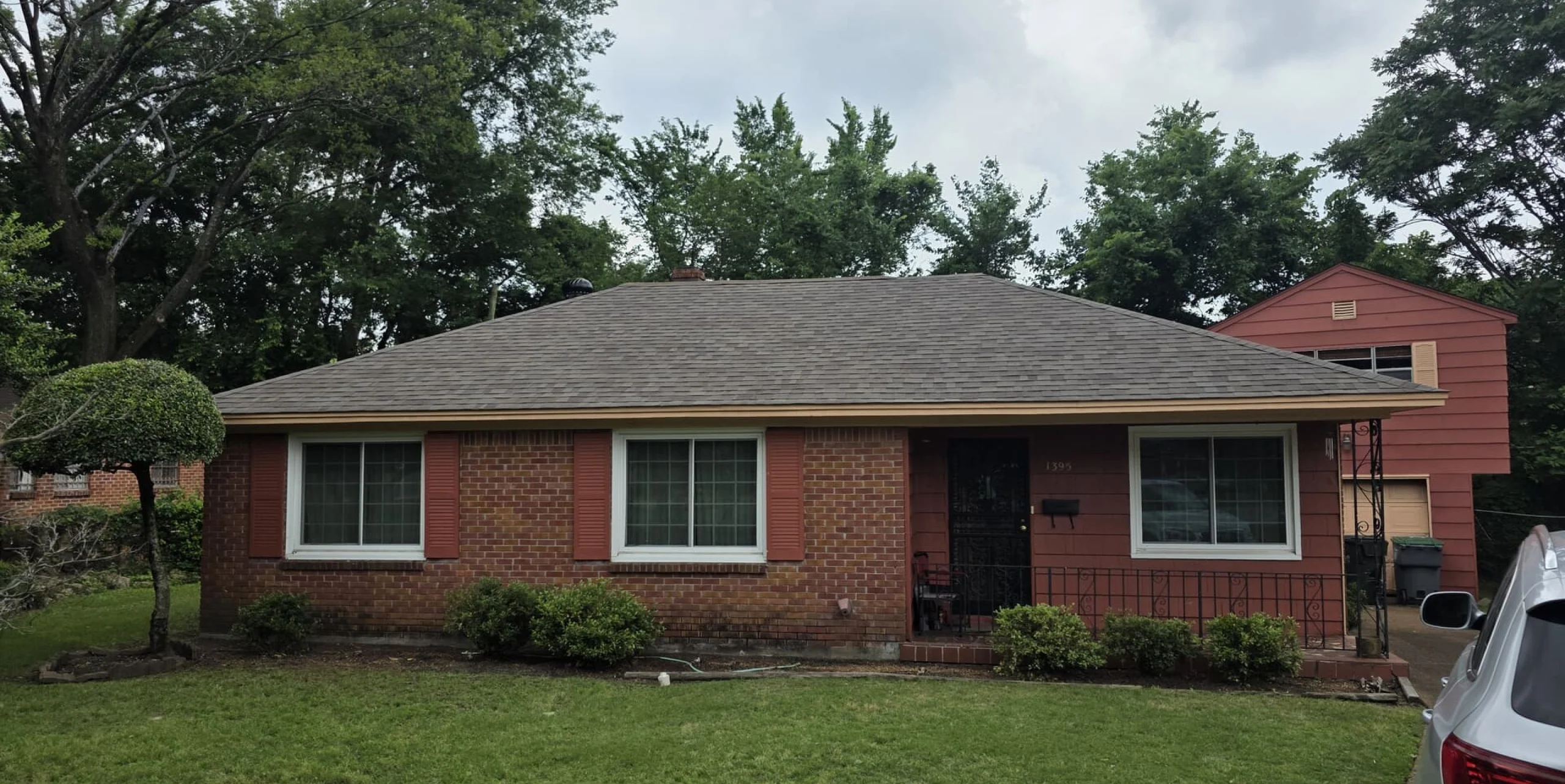
Standing seam versus exposed fastener
Standing seam hides its fasteners under raised seams, so nothing penetrates the weather surface. It costs more, it lasts longer, and it handles thermal movement better.
The difference shows up in maintenance, not on installation day.
Exposed fastener panels screw through the face of the panel, with a rubber washer sealing each screw. It costs considerably less and it is genuinely appropriate for barns, shops and outbuildings.
The difference shows up in maintenance. Exposed fastener roofs need their fasteners checked and eventually replaced, because temperature cycling slowly works screws loose and washers degrade in ultraviolet light.
Panel gauge is the specification that separates products that look identical on a sample board. Thinner gauge dents more easily and costs less, and both facts matter.
What metal is genuinely good at
Longevity, when installed correctly. Fire resistance. Shedding water on low pitches where shingles would struggle. And reflectivity, which matters in a Memphis summer.
Metal also handles wind well when the panel attachment is right, which is a meaningful advantage in a metro that gets straight line events.
Coating matters as much as the metal. The finish system determines how the color holds up under this much sun, and the warranty on the finish is separate from everything else.
What gets oversold
Metal is not maintenance free and it is not immune to hail. Hail can dent panels, and while a dent is usually cosmetic rather than functional, people are often surprised by that distinction after the fact.
It is also not automatically quieter or louder than shingles, because what you hear depends on decking, underlayment and insulation far more than on the panel.
And it is not waterproof by itself. Underlayment beneath the panel is what stops wind driven water at laps and terminations.
Ask how the roof handles at valleys, hips and around penetrations, because that flashing work is where skill shows and where leaks begin.
Details that decide the outcome
Fastener type and alloy compatibility. Putting the wrong fastener in an aluminum panel, or letting copper contact galvanized, sets up corrosion at the contact point.
Clearances for expansion. Metal moves with temperature and a panel installed with no room to move will oil can, distort, or tear at its fasteners.
Flashing and trim at every edge and transition. This is where metal roofs leak, same as every other roof.
If you are putting metal on a house rather than a barn, look at a finished job in person before deciding. Photographs flatten the profile and the sheen.
Living with a metal roof
Metal roofs are low maintenance rather than no maintenance. On exposed fastener systems the fasteners are the scheduled item, typically needing attention well before the panels do.
Keep debris out of valleys and off the panels where it can hold moisture. Organic debris sitting on metal is how corrosion starts in places the panel would otherwise survive indefinitely.
Walking on metal takes technique. Panels dent, ribs are the load paths, and a wrong step leaves a permanent mark. It is a reason to have somebody who works on metal handle anything up there, including gutter cleaning.
Done right, though, this is a roof you will think about far less often than a shingle roof, which is much of the appeal.
Questions we get asked
Is metal worth the extra cost?
On a house you intend to keep a long time, often yes. On a shorter horizon the math is less obvious, and exposed fastener panels change it again.
Will it make my house hotter?
No. Reflective metal generally reduces heat gain compared to dark shingles.
Can you install metal over my existing shingles?
Sometimes, depending on the deck condition and local requirements. It is not automatically a good idea and we would want to look first.
Do dents get covered by insurance?
It depends on the policy and whether the damage is judged cosmetic or functional. Worth asking your carrier specifically.
Do you do repairs on metal?
Yes: fastener walks, boot replacements, seam and flashing repairs, and full replacement.
What to take from this
Standing seam and exposed fastener are different products for different jobs and budgets.
Exposed fastener roofs need their fasteners maintained. That is the trade for the lower price.
Metal dents in hail, and dents are often judged cosmetic.
Underlayment, fastener compatibility and expansion clearance decide the outcome.
Get it handled
Jonathan Stephenson answers the phone himself, walks the roof, and gives you a written number. Serving Germantown, TN and the Memphis metro.