
November 2026
Hail tends to cross a whole stretch of town in a few minutes, and the next morning most roofs look exactly as they did the day before. That is the trouble with it. The damage that matters usually sits in the shingle mat, out of sight from the yard, and the first clues sit on the metal around the house.
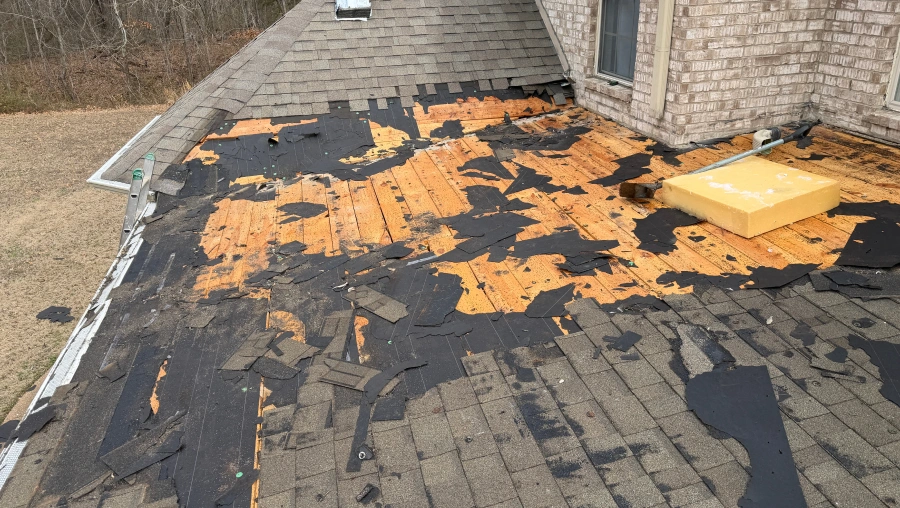
Evidence you can read from the ground
Start with the soft metal, because it keeps a record that shingles hide. Look at the tops of gutters, the downspouts, the caps on roof vents and any flashing you can see. Small round dents, or spots where the paint has been knocked off, tell you hail of real size came down.
Window screens and the painted sides of outdoor units hold marks too.
A screen with small tears or dimples on the side facing the storm is a good sign the roof above it took the same hits.
Walk the driveway and check the downspout outlets. A pile of shingle granules at the bottom of a downspout after a hail storm means the surface of the roof has been knocked loose somewhere.
Photograph all of it with the date showing, before anybody cleans up. Mark the day the storm came through on a calendar or in your phone, since every conversation after this starts with that date.

Why a roof that looks fine can be bruised
A hailstone does most of its harm under the surface. The hit crushes the mat of the shingle and knocks granules loose, leaving a soft spot that feels like a bruise on an apple when you press it.
From the street, a bruise looks like nothing at all. Over the next seasons the exposed spot dries in the sun, the mat cracks, and water finds the crack.
Some hits fracture the surface right away and show as dark circles where the granules are gone. Others leave the granules mostly in place and only show up when a hand is run across the shingle. Both count as damage.
Older roofs bruise more easily than new ones. In Bartlett, where many original roofs aged out side by side, one storm can mark a whole row of houses that were already close to the end.
What a proper inspection looks like
Jonathan goes up and works each slope in sections, marking the hits he finds with chalk so they show up in the photos. He looks at the side of the roof that faced the storm separately from the sheltered side, because the difference between them is part of the evidence.
Every vent, boot and piece of flashing gets looked at as well. Dented metal on top of the roof backs up what the shingles show.
You get the photos, a plain account of what he found, and his view on whether it is repairable. If it is not hail damage, he says so. Wear, blistering and old nail pops get mistaken for hail all the time, and calling them hail helps nobody.
If you file a claim, he can meet the adjuster on the roof and walk through the same marks. What the carrier decides is up to the carrier. Good documentation gives them the full picture to decide from.
A few shingles, a slope or the whole roof
A handful of hits on a young roof can be a spot repair. The damaged shingles come out, new ones get woven in, and the seal strips are hand sealed. That works when the rest of the roof is sound and the new shingles can be matched.
Matching is the hard part on an older roof.
Shingles fade and weather, product lines change, and a new piece beside a weathered one can stand out from the street.
When the hits cover most of one slope, rebuilding that slope keeps the repair even. When every slope is marked, or the roof was near the end anyway, a full replacement is the honest answer, and the deck gets checked once the old shingles are off.
Whatever the call, you get a written price with photos, and any opening gets tarped first if water is already coming in.
Why waiting makes it harder
Carriers set their own deadlines for reporting storm damage, and those windows close whether or not a stain has shown up. Read your policy or call your agent soon after the storm to find out yours.
Bruised shingles also keep getting worse in the sun. The longer a hit sits, the harder it becomes to tell hail apart from ordinary aging, which muddies the record you are trying to keep.
A free roof look costs you nothing and settles the question while the evidence is still fresh.
The page that goes with this
If hail has already marked your roof, the repair work is laid out on our hail damage repair page for Bartlett.
Questions we get asked
What should I photograph after a hail storm?
Anything with soft metal or paint: gutters, downspouts, vent caps, the outdoor unit, window screens and painted trim, plus the granules at each downspout outlet. Take wide shots and close ones with something for scale, like a coin, and keep the files with the date the storm came through.
Can I check for hail damage on the roof myself?
From the ground, yes: gutters, vent caps, screens and the granules at your downspouts tell you a lot. Climbing a roof after a storm is another matter, since bruises are hard to spot without knowing what to feel for, and a fall costs far more than the free roof look does.
Will a hail repair match the rest of my roof?
It depends on the roof's age and color. Jonathan looks for the closest match available and tells you before any work starts how close he can get. When a patch would stand out badly, rebuilding the whole slope is often the cleaner way to keep the roof looking like one roof.
Do I have to file a claim to get hail damage fixed?
No. Some people repair small damage on their own and skip the claim, and that is your call to make. If the damage is wide, talk to your agent about what your policy covers. Either way, the photos and the written account are yours to keep.
Why did my neighbor's roof get replaced and mine did not?
Two roofs on one street can take the same storm and come out differently. Age, slope direction, nearby trees and the shingle itself all change how a hit lands. A neighbor's new roof is a good reason to get yours checked. It does not decide what your roof needs.
What to take from this
Dented gutters, vent caps and screens tell you hail of real size came down.
A bruised shingle looks fine from the street and fails later.
Write down the storm date and photograph everything before cleanup.
Spot repair, one slope or the whole roof depends on how far the hits spread.
Get it handled
Jonathan Stephenson answers the phone himself, walks the roof, and gives you a written number. Serving Germantown, TN and the Memphis metro.