
November 2026
The soffit is the panel under the roof overhang, and on an older Bartlett house it is often where the first gap opens. A gap there is an open door. Squirrels, wasps and birds move in, overflow water gets into the plywood, and none of it shows from the yard until it is well underway. Most of it starts at a seam that opened a little at a time.
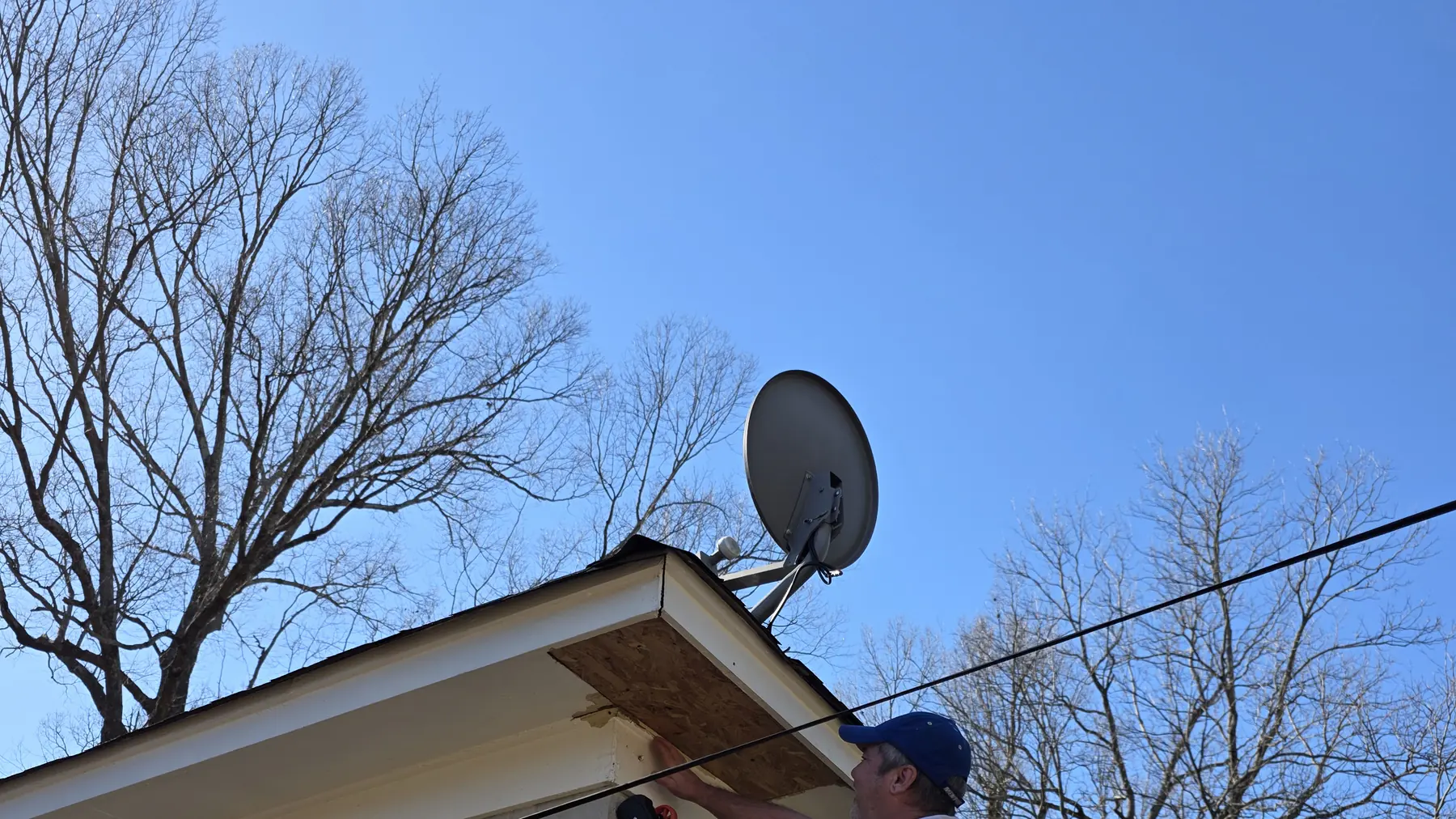
Signs something has moved into the eave
Animals leave clues before you ever see them. Chewed edges on a soffit panel, a round hole near a corner, droppings on the siding or the ground below, and scratching overhead in the early morning all point to the same place.
Wasps are quieter about it. A steady line of them flying in and out of one spot under the eave means a nest sits behind the panel.
Birds tend to use gaps where the soffit meets the fascia or the wall. Bits of straw or grass sticking out of a seam are the giveaway, especially in spring.
Do not seal a hole while something is still living behind it. A trapped squirrel will chew its way out somewhere else, often into the attic. Get the animal out first, with help from a wildlife service if needed, then close the opening.
How the openings start
Gaps rarely start as holes. The trim molding that holds soffit panels at the wall and the fascia shrinks and pulls away over the years, and nails that once held it tight work loose. A crack along one edge wide enough for a wasp is usually the first opening.
Vented soffit adds another way in.
The screen behind a vent strip or a round vent tears or rusts through, and a bird or a squirrel only needs a corner of it to start pulling.
Corners take the most abuse. Where two runs of soffit meet, the joint is short and exposed, and squirrels chew it because the edge gives them something to grip. A chewed corner tends to grow a little every week once an animal has found it.
Heavy tree cover gives them the route. Limbs close to the roof let a squirrel step from the trunk to the eave without touching the ground, and the chewing usually starts right where the limb comes closest.
Reading water damage on the underside
Water shows on soffit as dark staining, usually along the outer edge or at the corners where two runs meet. Paint that bubbles or peels in one spot, or a panel that has started to sag between its supports, means the wood is getting wet often.
Look straight up under the gutter outlets and the valleys.
Those are the places where water lands hardest, and the soffit below them tends to go first.
Press gently on a stained panel with a broom handle. Sound plywood feels firm. Rotted plywood gives, crumbles at the edge, or comes away in layers.
A water stained soffit is a symptom. Fixing the panel without fixing the gutter or the roof edge above it means the new wood starts getting wet the first week.
Closing the gap for good
Before anything gets sealed, Jonathan makes sure nothing is still living in the eave. That can mean watching the opening for activity, fitting a one way exit over the hole for a while, or having a wildlife service handle removal when a family of squirrels has settled in.
Wasp nests come out once the wasps are gone.
Closing a live nest inside an eave only sends them looking for the next gap, sometimes into the house.
The opening is then closed with material that matches what is already up there. Plywood soffit gets plywood, vinyl gets a matching vinyl panel, and aluminum gets aluminum, so the repair does not stand out from the yard. Vented panels stay vented and get fresh screen behind them.
Loose trim molding gets refastened or replaced along the whole run, since a tight patch beside a loose seam just moves the animal over a few feet. You get photos of the opening before it was closed and of the finished eave.
Keeping animals out once it is fixed
Trim back limbs that reach within jumping distance of the roof. A squirrel that cannot reach the eave easily usually moves on.
Clean the gutters often enough that water stays inside them, since soft wet wood is where animals start chewing.
Walk the house once a year and look up at every corner of the eave. A small gap caught early is a short repair, and an empty eave is far easier to close than an occupied one.
The page that goes with this
If your soffit has gaps, stains or soft panels, the repair work is laid out on our soffit repair page for Bartlett.
Questions we get asked
Can I just nail a board over the hole?
It might stop the animal for a while, but the wood around the hole is usually soft, which is why it was chewed. A board nailed to soft plywood pulls loose, and the gap opens again beside it. Replacing the damaged section and closing the seams lasts far longer.
Does soffit repair mean redoing the whole eave?
No. Short damaged sections are cut out and replaced on their own, as long as the framing behind them is sound. A full run makes sense when the plywood is soft in several places or coming apart along most of its length. Jonathan shows you which it is in photos.
Should the replacement soffit be vented?
If the old soffit was vented, yes, and the vents should line up with open space above them so air can actually move. If it was solid, a repair usually keeps it solid unless the attic needs more intake. Jonathan checks what the attic has before changing anything.
Can I replace plywood soffit with vinyl or aluminum?
Often, yes, and it means less painting. The framing behind it still has to be sound, and any rotted wood comes out first, since covering soft plywood traps the moisture already in it. The new panels also need to match the rest of the eave so the house reads as one.
How do I know if animals got into the attic?
Look and listen. Scratching or rolling sounds overhead, droppings or torn insulation near the eaves, and daylight showing through the soffit from the attic side are the usual signs. If you find any, have the animals removed before the soffit is closed, then have the opening repaired properly.
What to take from this
Chewed edges, nesting material and steady wasp traffic point to a gap in the eave.
Overflowing gutters and humidity soften older plywood soffit first.
Get animals out before any opening is closed.
Close the opening with matching panel material and refasten loose trim along the run.
Get it handled
Jonathan Stephenson answers the phone himself, walks the roof, and gives you a written number. Serving Germantown, TN and the Memphis metro.